
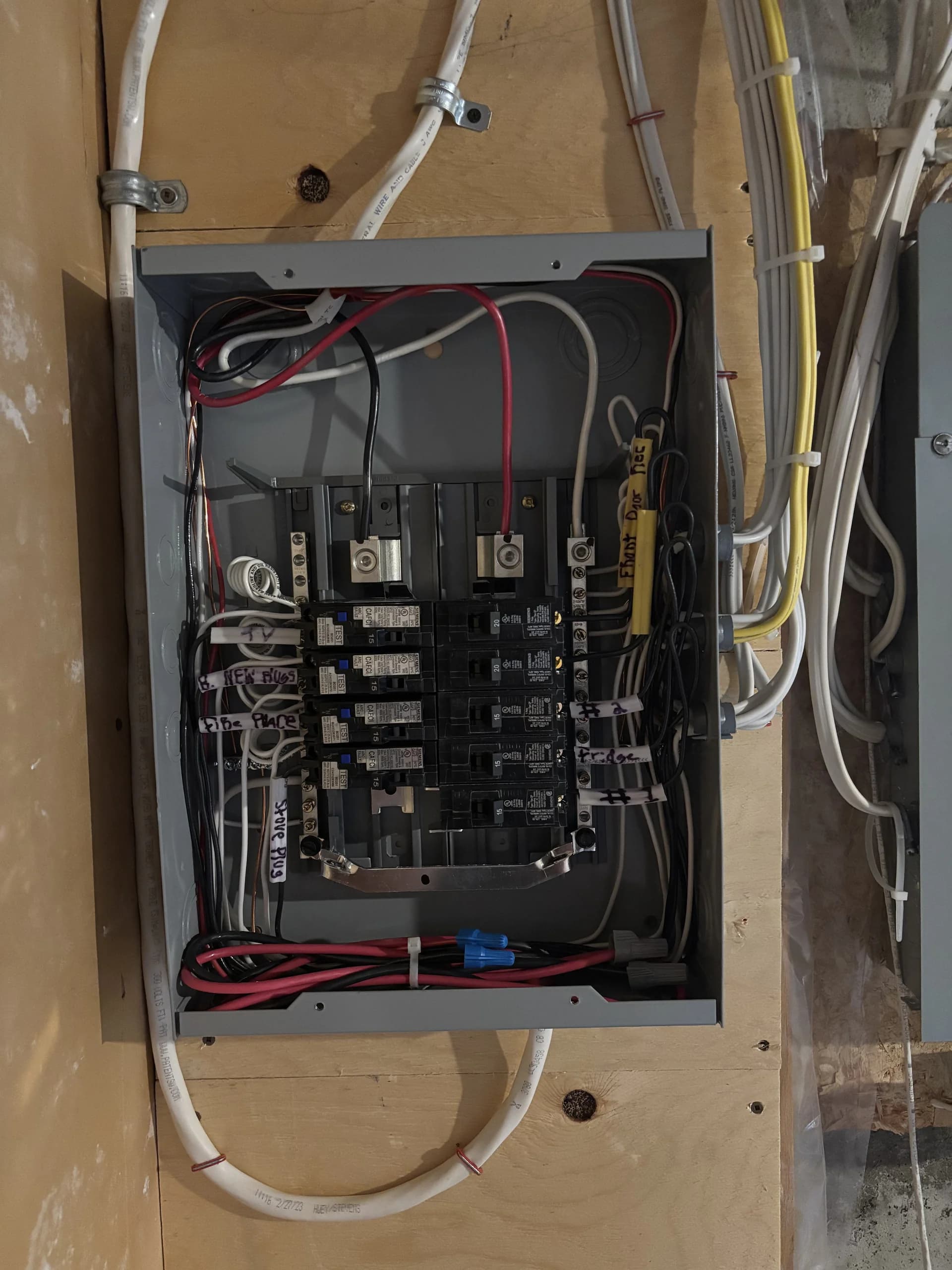
Electrical permits in Ontario.
Almost all electrical work in Ontario has to be reported to the Electrical Safety Authority before it starts. If you hired someone, filing it is their job, not yours. Here is how it actually works and why the paperwork is the part that protects you.
The short answer
The thing people call an “electrical permit” in Ontario is an ESA notification of work. It is filed with Electrical Safety Authority (ESA), not your municipality, and it is filed by whoever performs the work. When the job passes inspection, ESA issues a Certificate of Acceptance. That certificate is the document you will be asked for years later — by an insurer, a lawyer, or a buyer.
Two different documents
ESA notification is not a building permit.
These get used interchangeably and they are not the same thing. Some jobs need one. Some need both.
ESA notification of work
- Filed with the Electrical Safety Authority
- Covers the electrical work itself
- Filed by the party doing the work
- Results in a Certificate of Acceptance
- Needed for panel changes, new circuits, rewiring, service upgrades
Municipal building permit
- Filed with your town or city
- Covers structure, plumbing, HVAC, occupancy
- Usually the homeowner's or general contractor's responsibility
- Results in a municipal final inspection
- Needed for things like finishing a basement or an addition
Who files it
If a contractor asks you to pull the permit.
The notification is taken out by whoever is doing the work. In Ontario, if you are paying someone to do electrical work, that someone is required to be a Licensed Electrical Contractor — and the filing is theirs.
So if a contractor suggests you file it in your own name as the homeowner, treat that as information. The common reason is that they are not licensed to file one. What it means practically is that the accountability for the work has quietly moved from them to you: the filing is in your name, the inspection outcome is yours, and if something is wrong later you have far less recourse.
You can check any contractor's licence yourself in about thirty seconds, including ours, on the ESA contractor lookup. There is more on why that licence matters on our ESA-licensed vs handyman page.
Why it matters later
Unpermitted work costs nothing until it costs a lot.
When you sell
Buyers' lawyers ask for documentation on panel work and rewiring. No certificate means either a price reduction or a scramble to get work inspected that is already closed up behind finished walls.
When you claim
Most home policies have exclusions around unpermitted work and safety-code violations. If a fire starts in a circuit nobody ever inspected, the cause investigation is where that surfaces — at the worst possible moment.
When the next electrician arrives
An electrician who opens a panel full of work they cannot verify has a problem. They cannot certify someone else's undocumented work, so the honest ones will quote to make it right rather than build on top of it.
Common questions
What homeowners ask us.
Is an ESA notification the same as a building permit?
No, and this is the most common mix-up. An ESA notification covers the electrical work and is filed with the Electrical Safety Authority. A building permit comes from your municipality and covers structural, plumbing and mechanical work. A job can need one, the other, or both. Replacing a panel usually needs the ESA notification; finishing a basement typically needs both.
Who files the notification — me or the electrician?
Whoever is doing the work files it. If you hire someone, Ontario law requires that person to be a Licensed Electrical Contractor, and the notification is theirs to take out. If a contractor asks you to pull it in your own name, that is a signal worth paying attention to — it usually means they are not licensed to file one.
Can I do electrical work in my own house?
ESA publishes specific guidance for homeowners doing their own work, and it is narrower than most people assume — it is limited to your own home, and the work still has to be filed with ESA and inspected. It does not extend to rental units, a property you do not live in, or work for anybody else. Read ESA's own DIY page before you start rather than relying on a contractor's summary, including ours.
What is a Certificate of Acceptance?
It is the document ESA issues once the work has been inspected and found to comply with the Ontario Electrical Safety Code. It is the proof the work was done properly. Keep it — it is what your insurer, your lawyer, or a buyer's agent will ask to see later.
What happens if work was done without a permit?
Nothing, right up until it matters. It surfaces when you sell and the buyer's lawyer asks for documentation on the panel, when you make a claim and your insurer investigates the cause, or when a future electrician opens the panel and finds work they cannot certify. At that point the cost of sorting it out is higher than the permit would ever have been, because someone has to inspect and often redo work that is already closed up behind drywall.
Do you handle all of this?
Yes. Top Choice Electrical is a licensed electrical contractor, so the notification is filed before work starts, the inspection is arranged with Electrical Safety Authority (ESA), and the Certificate of Acceptance comes to you when it passes. It is part of the job, not an extra you have to chase.
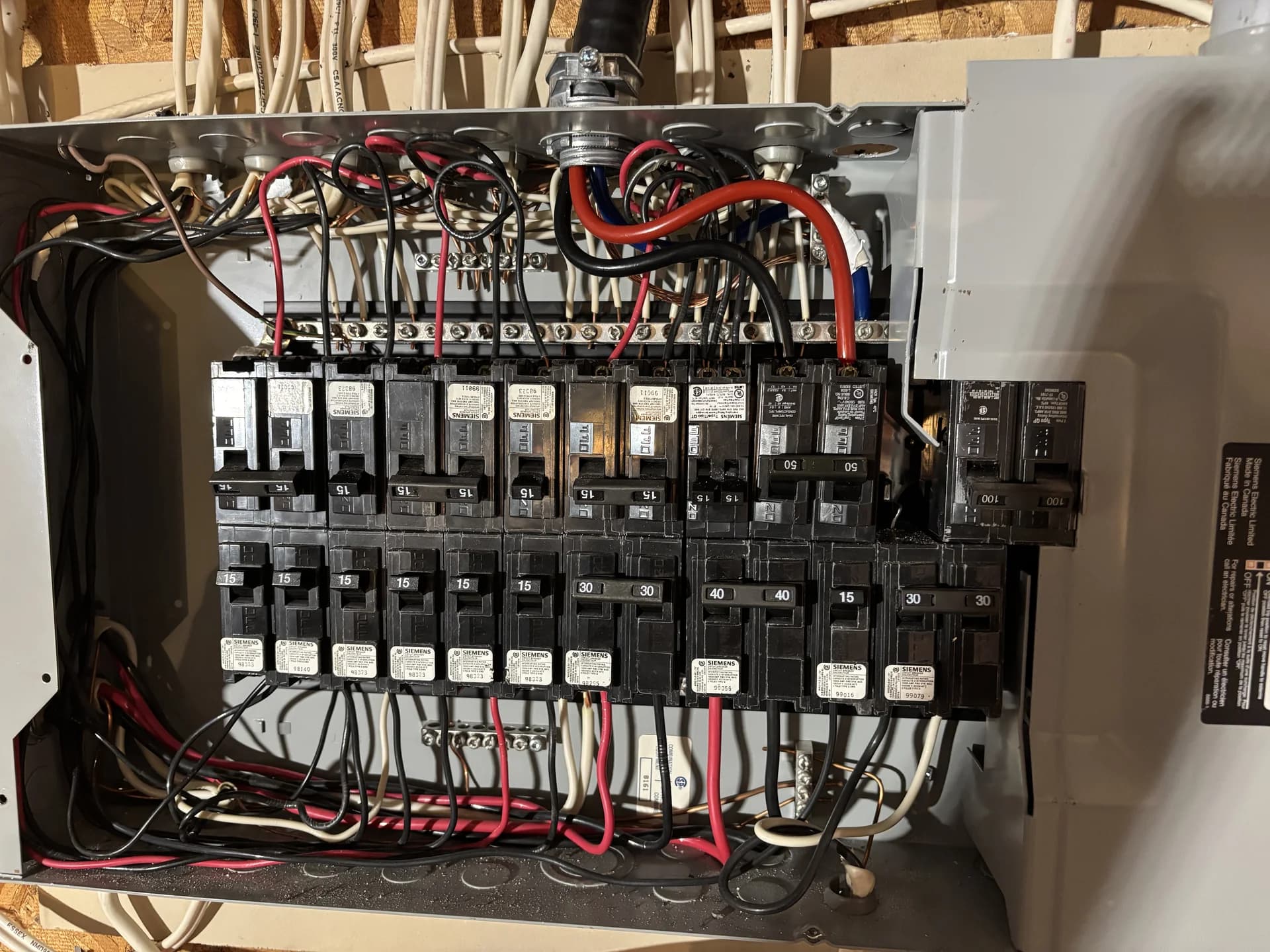
Permitted, inspected, documented
The paperwork is part of the job.
22 years on the tools, 6 running his own shop. Every job that needs a notification gets one, every inspection gets booked, and the certificate comes to you.