
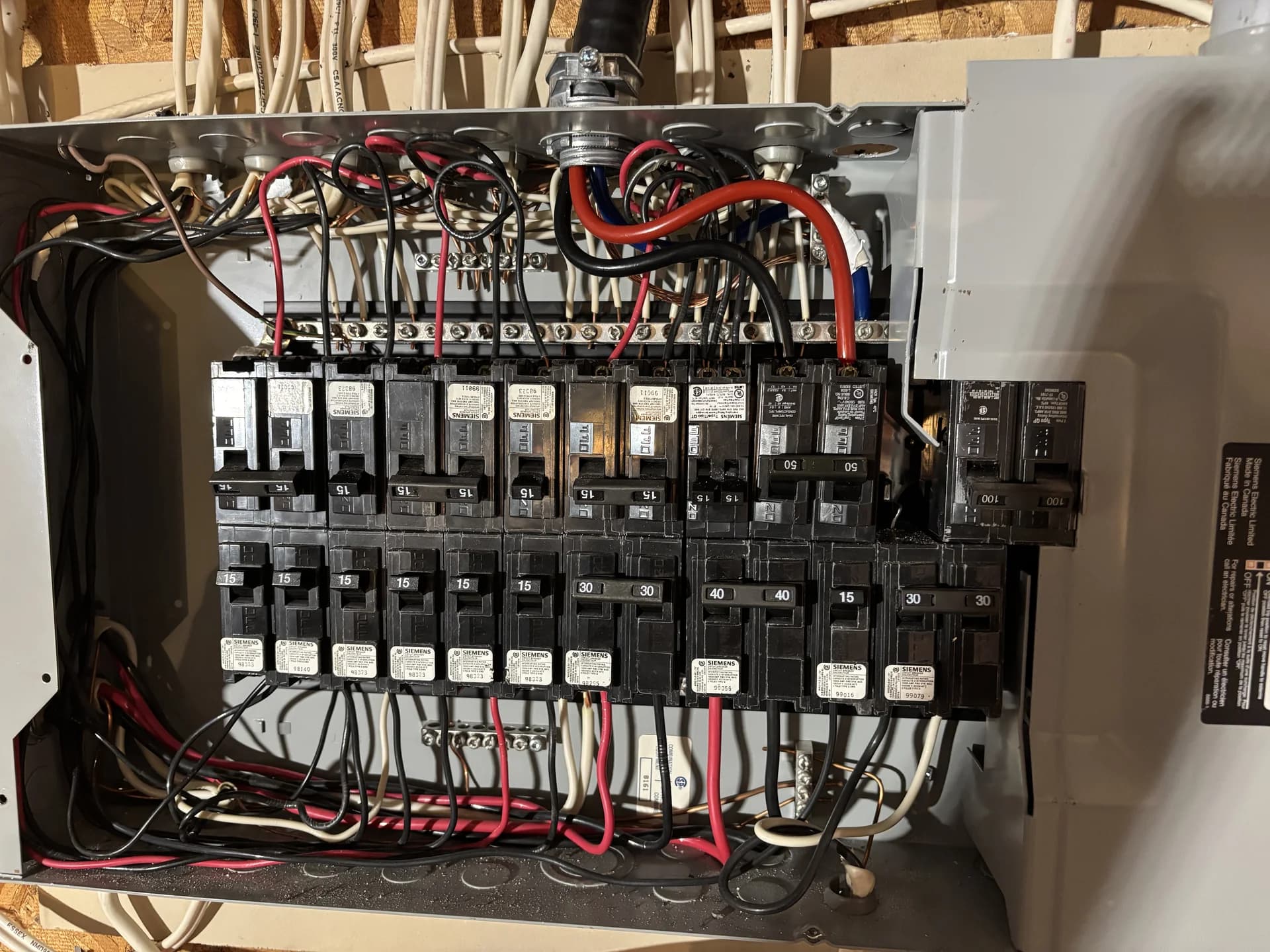
Federal Pioneer Stab-Lok panels.
If a home inspector or an insurer has flagged your panel, here is the honest version: what the documented concern actually is, what ESA does and does not require, and how to find out whether yours is a problem before anyone sells you a new one.
The short answer
Federal Pioneer was the Canadian licensee of the Stab-Lok breaker design; Federal Pacific and FPE are the US names for the same system. The documented concern is that these breakers have been reported to fail to trip under overcurrent — the one thing a breaker exists to do. There is no ESA requirement to replace the panel because of its brand. There is a good reason to have one actually tested rather than guessed at.
What is documented
A breaker that doesn't trip is a breaker that isn't there.
A circuit breaker has one safety job. When a circuit draws more current than the wire behind the wall can carry, the breaker opens and cuts the power before the wire gets hot enough to start a fire. Everything else about a panel is convenience. That one function is the safety.
Independent bench testing of Stab-Lok breakers over several decades, including Canadian Federal Pioneer units, has reported a meaningful proportion failing to open under overcurrent conditions. Schneider Canada recalled certain Federal Pioneer breakers in 1997. The reported failure is attributed to the design of the breaker rather than to its age, which is the part that matters practically: putting a brand-new breaker of the same type into the same panel is not generally treated as having solved anything.
What this does not mean is that every Federal Pioneer panel in Ontario is about to cause a fire. Plenty have sat in service for forty years without incident. It means the protection you are relying on is less certain than the protection a modern panel gives you, and that uncertainty is worth resolving deliberately rather than ignoring or panicking about.
Identifying one
Four ways to tell what you have.
The name on the label
Federal Pioneer, Federal Pacific, FPE, or Stab-Lok printed on the panel door, the inside of the cover, or the circuit directory.
The breaker toggles
Narrow-bodied breakers with thin stem toggles, commonly red, orange or black. They look visibly different from a modern Siemens, Schneider or Eaton breaker.
The era of the house
Common in Ontario homes wired roughly from the 1960s through the early 1980s — which covers a lot of the original housing stock in Newmarket, Aurora and Richmond Hill.
A previous inspection report
If the house changed hands in the last decade, the panel type is often already noted in the home inspection from that sale.
Don't take the cover off.
The main lugs inside a panel stay energized even when the main breaker is switched off. Reading the label on the outside is safe. Removing the dead front is not. Send us a photo of the panel door instead — text it to (416) 805-6676 and we can usually tell you what it is from that.
In practice
Where this usually comes up.
On a home inspection
Inspectors flag the panel type because it is known, not because they have tested your breakers. It becomes a negotiating point. An actual assessment from a licensed electrician gives you a fact to replace the flag with.
With your insurer
Some insurers ask about panel type at renewal or when you switch providers. If yours makes replacement a condition of coverage, what they want afterwards is documentation — which is the ESA Certificate of Acceptance a licensed contractor obtains for you.
When the house needs more power
This is the common one. The panel is full, or you are adding an EV charger, a heat pump, or a finished basement, and the existing service cannot carry it. At that point a service upgrade resolves the panel question and the capacity question in one visit rather than two.
Common questions
What homeowners ask us.
Does ESA require me to replace a Federal Pioneer panel?
No. The Electrical Safety Authority does not require replacement simply because a panel carries the Federal Pioneer name. There is no recall on the panels themselves and no legal obligation to swap one out. What triggers work is a specific defect found on inspection, an insurer or lender making it a condition, or a panel that is full, damaged, or too small for what the house now draws.
How do I know if I have one?
Look at the label on the panel door or the directory inside it — the name Federal Pioneer, Federal Pacific, FPE or Stab-Lok is usually printed there. The breakers are the other tell: Stab-Lok breakers have a distinctive narrow body and the toggles are often red, orange or black with a thin stem. Do not remove the dead front cover to look inside. The main lugs stay energized even with the main breaker off.
What is actually wrong with them?
The documented concern is failure to trip. Independent bench testing of Stab-Lok breakers, including Canadian Federal Pioneer units, has reported a meaningful share failing to open under overcurrent conditions — the one job a breaker exists to do. Schneider Canada also recalled certain Federal Pioneer breakers in 1997. The reported issue is attributed to the breaker design rather than to age, which is why fitting a brand-new breaker of the same type is not treated as a fix.
My home inspection flagged the panel. Does that mean I have to replace it?
Not automatically. A home inspector flags the panel type because it is a known talking point, not because they have tested your specific breakers. What it does mean is that it will come up in the negotiation and may come up again with your insurer. Getting a licensed electrician to actually assess it gives you something factual to work from instead of a line on a report.
Can you just replace the breakers instead of the whole panel?
Sometimes, but it is often the wrong value. Because the reported concern is with the breaker design, replacing like with like does not address it, and compatible alternatives are limited and not cheap. In a lot of houses the panel is also already full or undersized for a heat pump, an EV charger or a finished basement — at which point a service upgrade solves three problems for one mobilization instead of one problem twice.
Do you pull the ESA permit?
Yes. Top Choice Electrical is a licensed electrical contractor, so the ESA notification is filed by us before the work starts, the inspection is arranged, and you receive the Certificate of Acceptance when it passes. That certificate is the document your insurer or your buyer's lawyer will ask for.
Find out instead of guessing
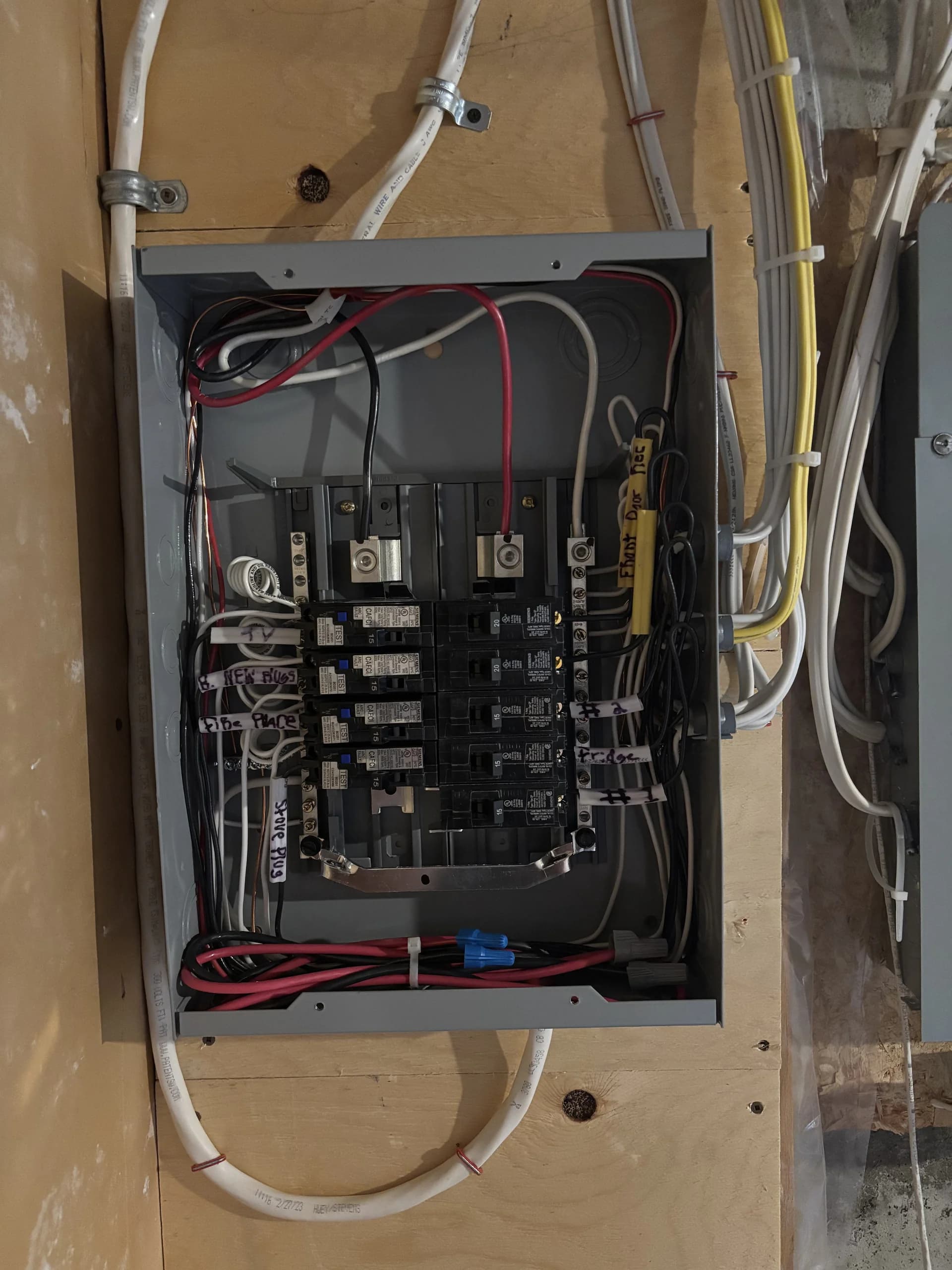
Send Tim a photo of your panel door.
22 years on the tools, most of it in York Region housing stock from exactly this era. Tim will tell you what you have, whether it needs doing, and what it would take — and he will tell you if the answer is nothing.