
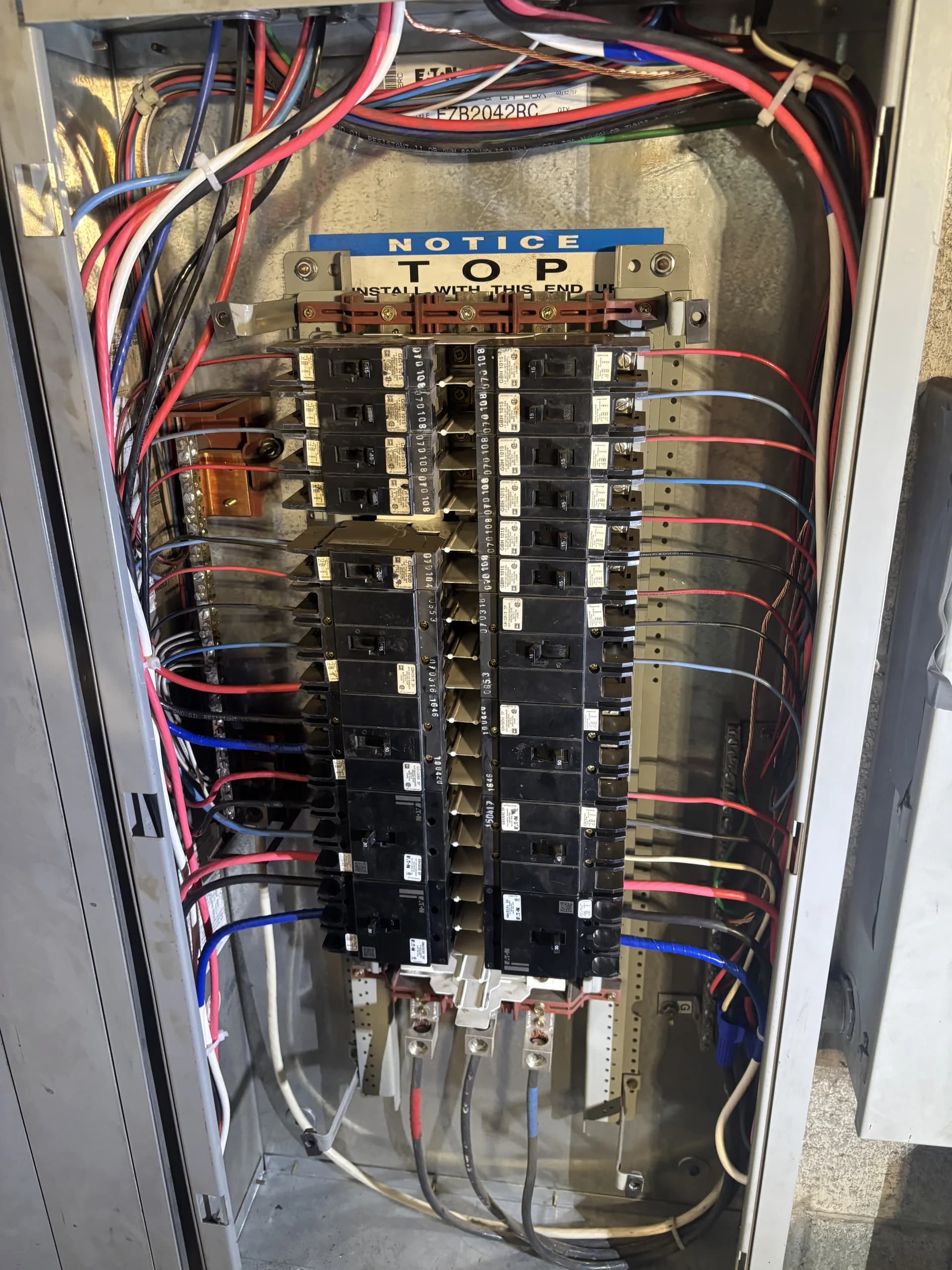
Knob-and-tube wiring and your insurer.
If a renewal letter or a closing condition has put you on a deadline, the useful question isn't whether knob-and-tube is bad. It's what your insurer will actually accept as proof it's been dealt with — because that determines how much of your house has to come apart.
The short answer
Many Ontario insurers either decline or restrict coverage on homes with live knob-and-tube, and some apply a surcharge instead. What they generally want is for the old wiring to stop carrying current — either removed, or permanently disconnected at both ends — and for that to be documented by an ESA Certificate of Acceptance. Removing every strand of dead wire from inside your walls is usually not the requirement, and assuming it is can multiply the cost of the job.
The distinction that matters
Removed, or just permanently dead?
These are very different jobs with very different prices, and the words in your insurer's letter decide which one you need. Get their requirement in writing before anyone starts cutting.
De-energized in place
New circuits are run to everything the old wiring used to feed. The knob-and-tube is disconnected at both ends and left in the wall and attic, carrying nothing.
- Far less damage to finished surfaces
- Accepted by many insurers when documented
- Usually the shorter timeline — relevant on a closing deadline
Physically removed
The old conductors are pulled out of the structure entirely. That means access — opening walls and ceilings that are currently finished.
- Required by some insurers and some lenders
- Makes sense during a gut renovation anyway
- Carries drywall, plaster and paint costs beyond the electrical
How it goes
Four steps, in this order.
- 1
Get the requirement in writing
Ask your insurer or broker exactly what they need: removal, or de-energizing plus documentation. One sentence from them can change the scope of the job substantially. Do this first, before you book anyone.
- 2
Find out what is actually still live
Most older houses have been partially updated already. A diagnostic visit establishes which circuits are still on knob-and-tube rather than assuming the whole house is. This is frequently where the scope shrinks.
- 3
The work, under an ESA notification
New circuits run, loads transferred, old wiring disconnected at both ends. The notification is filed before work starts — see our page on how ESA permits work in Ontario.
- 4
Inspection and certificate
ESA inspects and issues the Certificate of Acceptance. That is the document that goes to your insurer, and the one to keep for whenever you sell.
More detail on the permit side is on our Ontario electrical permits page, and the scope of the work itself is covered under knob-and-tube removal. If your panel is also original, it is worth reading about Federal Pioneer Stab-Lok panels — the two tend to turn up in the same houses.
Common questions
What homeowners ask us.
Does knob-and-tube wiring have to be removed, or just disconnected?
This is the question that saves people the most money and almost nobody asks it. Insurers are generally concerned with knob-and-tube that is live. In many houses the practical answer is to run new circuits, transfer everything onto them, and permanently disconnect the old wiring at both ends — the physical wire stays in the wall cavity and the attic, dead. Tearing it all out means opening up finished walls and ceilings, which is where the cost escalates. Confirm what your specific insurer will accept in writing before you choose, because they are not all identical.
What documentation will my insurer want?
Almost always an ESA Certificate of Acceptance — the document Electrical Safety Authority (ESA) issues after the work has been inspected and passed. A contractor's invoice is not the same thing and is often not accepted. This is one of the clearest reasons to use a licensed electrical contractor for this specific job: an unlicensed person cannot file the notification, so there is no certificate at the end, so the work does not satisfy the condition you paid to satisfy.
I just bought the house and have 60 days. Is that realistic?
Usually yes, if you start immediately. A closing condition with a short window is common and it is the most time-pressured version of this job. The constraint is rarely the wiring itself — it is scheduling the ESA inspection and getting any access issues sorted. Call as soon as you know the deadline rather than near the end of it, and tell us the date; it changes how the work gets sequenced.
Can it be done in stages?
Technically yes, and sometimes that is the right call for a budget. But understand what it does to the insurance problem: if any knob-and-tube is still live, you generally have not met the condition yet. Staging works when it is planned around getting all of it de-energized at a defined point, not when it leaves a few live circuits indefinitely.
Why do insurers care so much about it?
Knob-and-tube is not inherently defective — plenty of it was installed to the standard of its day and has sat quietly for ninety years. The concerns are about what has happened since: the original rubber and cloth insulation becomes brittle with age and heat, the splices were made in open air rather than in junction boxes, there is no ground conductor, and the system was designed for a house with a few light fixtures rather than one with a kitchen full of appliances. Add decades of homeowner modifications and building insulation packed over conductors that were meant to dissipate heat into open air, and the risk profile is genuinely different from modern cable.
What if only part of the house has it?
Extremely common, and it is good news for the scope. Many York Region houses have been partially updated already — the kitchen and bath rewired at some point, the original circuits still feeding bedroom lighting or an attic fixture. The first job is finding out exactly what is still live, which is a diagnostic visit rather than a guess. Sometimes the remaining scope is far smaller than the homeowner feared.
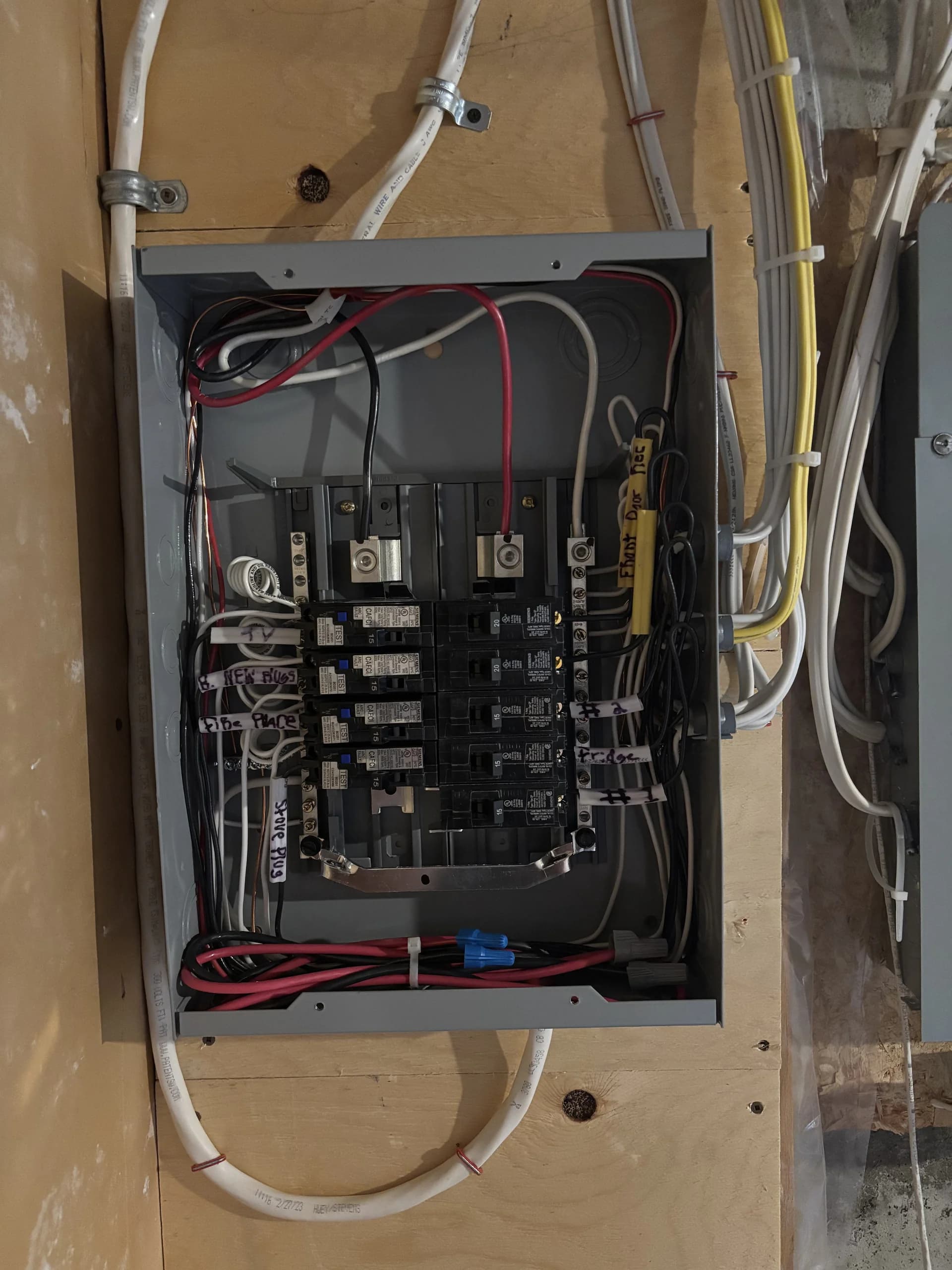
On a deadline?
Tell Tim the date your insurer gave you.
22 years in exactly this housing stock. First step is finding out how much is actually still live — which is often far less than the renewal letter made it sound.